Water Extraction & Removal in Charlotte, NC
Standing water keeps moving into drywall, subfloor and the crawl space below until it is pulled out. Charlotte water damage pros extract first, then dry to the IICRC S500 standard.
(888) 578-4720Get a Charlotte pro on the line for standing water- IICRC S500 drying standard
- Truck-mounted extraction
- 24/7 dispatch
What to do first about standing water in Charlotte
- 1
Stop the source
Shut the main water valve or the fixture shutoff if it is safe to reach.
- 2
Kill wet circuits
If the panel is dry, switch off power to rooms with standing water.
- 3
Photograph first
Take wide and close photos before moving furniture or pulling rugs.
- 4
Call for extraction
Reach the 24/7 Charlotte restoration team so truck-mounted extraction can start.
How standing water is handled in Charlotte, NC
Every job below follows the IICRC S500 drying standard. The record column is what ends up in the claim file.
- 01MapThe tech who does the walkthrough maps moisture with pinless meters and thermal imaging before any equipment goes down.Moisture map, category and class of loss
- 02ExtractThe extraction crew pulls standing water with truck-mounted extraction, so water leaves the building instead of moving rooms.Timestamped photos before any demolition
- 03DryThe drying team sets air movers to each room's evaporation load and runs LGR dehumidifiers, or desiccants for Class 4 materials.Daily psychrometric readings
- 04VerifyMost crews pull equipment only when wet materials read within 2 to 4 points of a dry reference material in the same building.Drying log that closes the claim file
What does water extraction and removal cost in Charlotte, NC?
In Charlotte, NC, water extraction and removal typically runs $400 to $3,500, depending on the water category, how many square feet are wet, the flooring type and whether the water reached the crawl space.
One room, clean water
$400 to $1,200
- Truck-mounted extraction
- Moisture map
- Carpet and pad extraction
Several rooms
$1,200 to $2,500
- Extraction across rooms
- Baseboard and wall checks
- Setup for drying
Crawl space or Category 3
$2,500 to $3,500+
- Crawl-space pump-out
- Contaminated material removal
- Antimicrobial treatment
Ranges move with the water category, the square footage, the material class and how fast drying started. For a planning number, try the Charlotte water damage cost calculator.
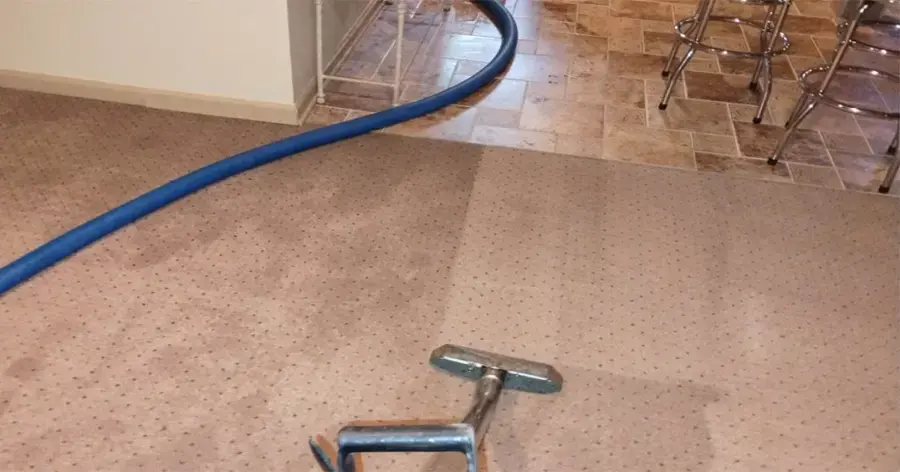
Extraction is the first move on almost every water loss in Charlotte. A wet-vac moves a few gallons; a truck-mounted extractor pulls water out of carpet, pad and hard floors fast and sends it out of the house through a hose, so it stops soaking into the next room. The extraction crew removes as much liquid water as possible before a single air mover is set, because removing water is far faster than evaporating it.
What extraction covers in a Charlotte home
- Standing water on hardwood, tile, vinyl plank and carpet on the main floor
- Water that ran through the floor into a vented crawl space over red clay
- Carpet and pad, which are extracted with weighted or ride-on tools until they stop releasing water
- Finished basements in hillside homes, where water pools against the lowest wall
How the extraction crew works
The tech who does the walkthrough first maps moisture with pinless meters and a thermal camera, because water travels under baseboards and along the bottom plate of walls where it cannot be seen. The category of the water decides the next step. Clean water from a supply line is extracted and dried in place. Gray water from a washer or dishwasher needs more cleaning. Category 3 water, such as sewage or creek flooding, means porous materials get removed, not dried, and the job moves to sewage cleanup protocol.
After extraction, the drying team sets air movers and LGR dehumidifiers for the room. That phase is covered on the structural drying page. Most crews record readings every day until the wet materials match a dry reference in the same house.
Water still on the floor? Every hour it sits, it moves deeper into the subfloor and the crawl space below.
Call (888) 578-4720 for water extractionWhy speed matters in Charlotte's humid air
Charlotte summers hold a lot of moisture in the air, so wet materials dry slowly on their own and mold can start inside 24 to 48 hours. Opening windows in July usually adds humidity rather than removing it. Extraction plus closed-room dehumidification is what brings the numbers down. For flood safety guidance, see Ready.gov flood safety and the National Weather Service flood safety pages.
Do not run a household vacuum on standing water
A regular vacuum is not built for water and creates a shock risk. If power to the wet area is still on and the breaker panel is dry, switch that circuit off before anyone walks in the water.
Where the Charlotte water damage restoration team works
The Charlotte restoration team covers the whole city, from Uptown, South End and Dilworth to Ballantyne, Steele Creek, University City and the Catawba side near Mountain Island Lake.
See every neighborhood and ZIP codeRelated water damage services in Charlotte
Water Extraction and Removal questions for Charlotte homeowners
Short answers to the questions Charlotte callers ask most about standing water.
Talk to someone about the water nowHow much water can a truck-mounted extractor remove?
Far more than a shop vac. A truck-mounted unit runs off its own engine and pulls water from carpet, pad and hard floors continuously, sending it out of the building through a hose. That is why extraction usually happens before any drying equipment goes down.
Can wet carpet in Charlotte be saved?
Often, when the water is clean and extraction starts early. Carpet touched by Category 3 water, such as sewage or creek flooding, is removed because it cannot be made safe. Pad under wet carpet is frequently replaced even when the carpet is kept.
Does water on the main floor reach the crawl space?
Very often. Most Charlotte homes sit on vented crawl spaces, and water runs through subfloor seams and around pipe penetrations. The tech who does the walkthrough checks below the floor, not just the rooms you can see.
How is it decided what gets removed?
The category of the water and the material decide it. Clean water on drywall and hardwood is usually dried in place. Porous materials touched by Category 3 water get removed, not dried.
Is extraction the same as drying?
No. Extraction removes liquid water. Drying removes the moisture left inside wood, drywall and concrete, using air movers and dehumidifiers, and it is verified with daily readings.
What does the insurance adjuster want to see?
A moisture map from day one, photos taken before anything was removed, the category and class of the loss, and daily drying readings. Coverage depends on your policy, so it is worth checking with your own insurer.
Water Extraction and Removal in Charlotte? Get the drying started today.
Every hour of standing water pushes it deeper into subfloor, drywall and framing. The Charlotte restoration team works around the clock.