Structural Drying & Dehumidification in Charlotte, NC
Surface-dry is not dry. In Charlotte's humid air, framing, subfloor and hardwood hold water long after the floor looks fine. The drying team dries to readings, not to a calendar.
(888) 578-4720Get a Charlotte pro on the line for a wet structure- IICRC S500 drying standard
- LGR and desiccant dehumidifiers
- 24/7 dispatch
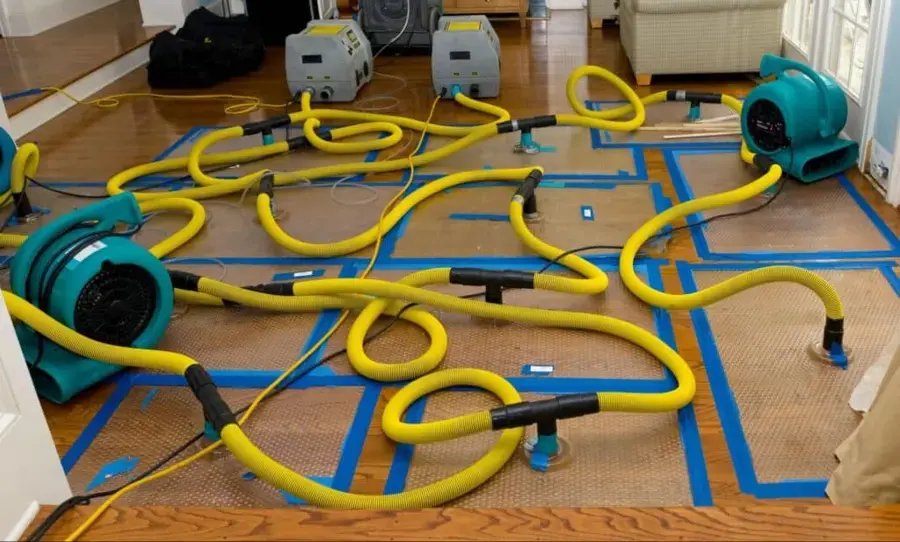
What to do first about a wet structure in Charlotte
- 1
Keep the space closed
Leave windows shut in humid weather so the dehumidifiers can work.
- 2
Leave equipment running
Turning air movers off at night slows drying and adds days.
- 3
Do not reinstall yet
Hold off on new flooring or paint until the readings hit the goal.
- 4
Call with questions
Reach the 24/7 Charlotte restoration team if a unit stops or water returns.
How a wet structure is handled in Charlotte, NC
Every job below follows the IICRC S500 drying standard. The record column is what ends up in the claim file.
- 01MapThe tech who does the walkthrough maps moisture with pinless meters and thermal imaging before any equipment goes down.Moisture map, category and class of loss
- 02ExtractThe extraction crew pulls standing water with truck-mounted extraction, so water leaves the building instead of moving rooms.Timestamped photos before any demolition
- 03DryThe drying team sets air movers to each room's evaporation load and runs LGR dehumidifiers, or desiccants for Class 4 materials.Daily psychrometric readings
- 04VerifyMost crews pull equipment only when wet materials read within 2 to 4 points of a dry reference material in the same building.Drying log that closes the claim file
What does structural drying and dehumidification cost in Charlotte, NC?
In Charlotte, NC, structural drying typically runs $1,000 to $6,000, depending on the class of the loss, the square footage, how many air movers and dehumidifiers are needed and for how many days, and whether hardwood or crawl-space framing is involved.
Class 1 to 2, one area
$1,000 to $2,500
- Air movers and LGR
- Daily readings
- Drying log
Class 3, several rooms
$2,500 to $4,500
- Wall cavity drying
- Crawl-space drying
- Psychrometric monitoring
Class 4, dense materials
$4,500 to $6,000+
- Desiccant dehumidifiers
- Hardwood drying mats
- Extended monitoring
Ranges move with the water category, the square footage, the material class and how fast drying started. For a planning number, try the Charlotte water damage cost calculator.
Structural drying is the part of a water loss that decides whether problems show up months later. Drywall, framing, subfloor and hardwood absorb water, and it stays inside long after the surface feels dry. IICRC S500 is the industry drying standard, and it describes a measured process: map the moisture, set equipment to match it, record readings every day, and stop only when the wet materials match dry materials in the same building.
Why Charlotte drying takes planning
- Humid summer air slows evaporation, so open windows usually add moisture instead of removing it
- Crawl spaces under most homes hold damp air against the subfloor
- Older homes in Dilworth, Myers Park and Elizabeth have plaster walls and old-growth hardwood that dry slowly
- Newer homes often have engineered floors and multi-layer finishes that trap water
How the drying plan works
Class 1 through 4 sets how much equipment a room needs. Class 1 is a small, low-absorption area; Class 4 means dense materials such as hardwood, plaster and concrete, which may call for desiccant dehumidifiers and specialty drying mats. The drying team places air movers to match each room's evaporation load and runs LGR dehumidifiers to pull that moisture out of the air. The tech who does the walkthrough takes psychrometric readings of temperature and humidity plus material readings every day. Most crews pull equipment only when wet materials read within 2 to 4 points of a dry reference material.
Drying follows water extraction on nearly every job. Contaminated losses, such as sewage backups, add removal and antimicrobial steps before drying starts.
Floor still feels damp days after a leak? A moisture reading tells the truth.
Call (888) 578-4720 to start structural dryingWhat the drying log shows
A drying log lists the date, the room, the equipment in place, the air readings and the material readings at marked points. It shows the adjuster that the structure reached the goal, and it shows you why equipment stayed or left. The EPA indoor air quality pages explain why lingering moisture matters, and Ready.gov covers flood recovery basics.
Equipment leaves on readings, not a schedule
A contained Class 1 loss often dries in three to five days. Hardwood, plaster and crawl-space framing take longer. The readings decide, not the calendar.
Where the Charlotte water damage restoration team works
The Charlotte restoration team covers the whole city, from Uptown, South End and Dilworth to Ballantyne, Steele Creek, University City and the Catawba side near Mountain Island Lake.
See every neighborhood and ZIP codeRelated water damage services in Charlotte
Structural Drying and Dehumidification questions for Charlotte homeowners
Short answers to the questions Charlotte callers ask most about a wet structure.
Talk to someone about the water nowWhat does IICRC S500 mean?
IICRC S500 is the industry drying standard for water damage restoration. It lays out how water losses are assessed, categorized, dried and verified.
What is the difference between Class 1 and Class 4?
The class describes how much water was absorbed and by what. Class 1 is a small area of low-absorption materials. Class 4 involves dense materials such as hardwood, plaster and concrete that release water slowly and need specialty equipment.
Why not just open the windows?
In Charlotte's humid months, outdoor air often carries more moisture than the air inside, so open windows can slow drying. Closed rooms with dehumidifiers dry faster.
How do you know when it is dry?
Meters compare the wet materials with a dry reference material in an unaffected part of the same building. When they read within 2 to 4 points, the drying goal is met.
What is an LGR dehumidifier?
LGR stands for low grain refrigerant. These dehumidifiers pull more water out of the air than household units, even as the air gets drier, which keeps drying moving.
Can I turn the equipment off at night?
It is best not to. Drying depends on steady airflow and dehumidification, and stopping the equipment adds days and can let moisture climb back into materials.
Structural Drying and Dehumidification in Charlotte? Get the drying started today.
Every hour of standing water pushes it deeper into subfloor, drywall and framing. The Charlotte restoration team works around the clock.